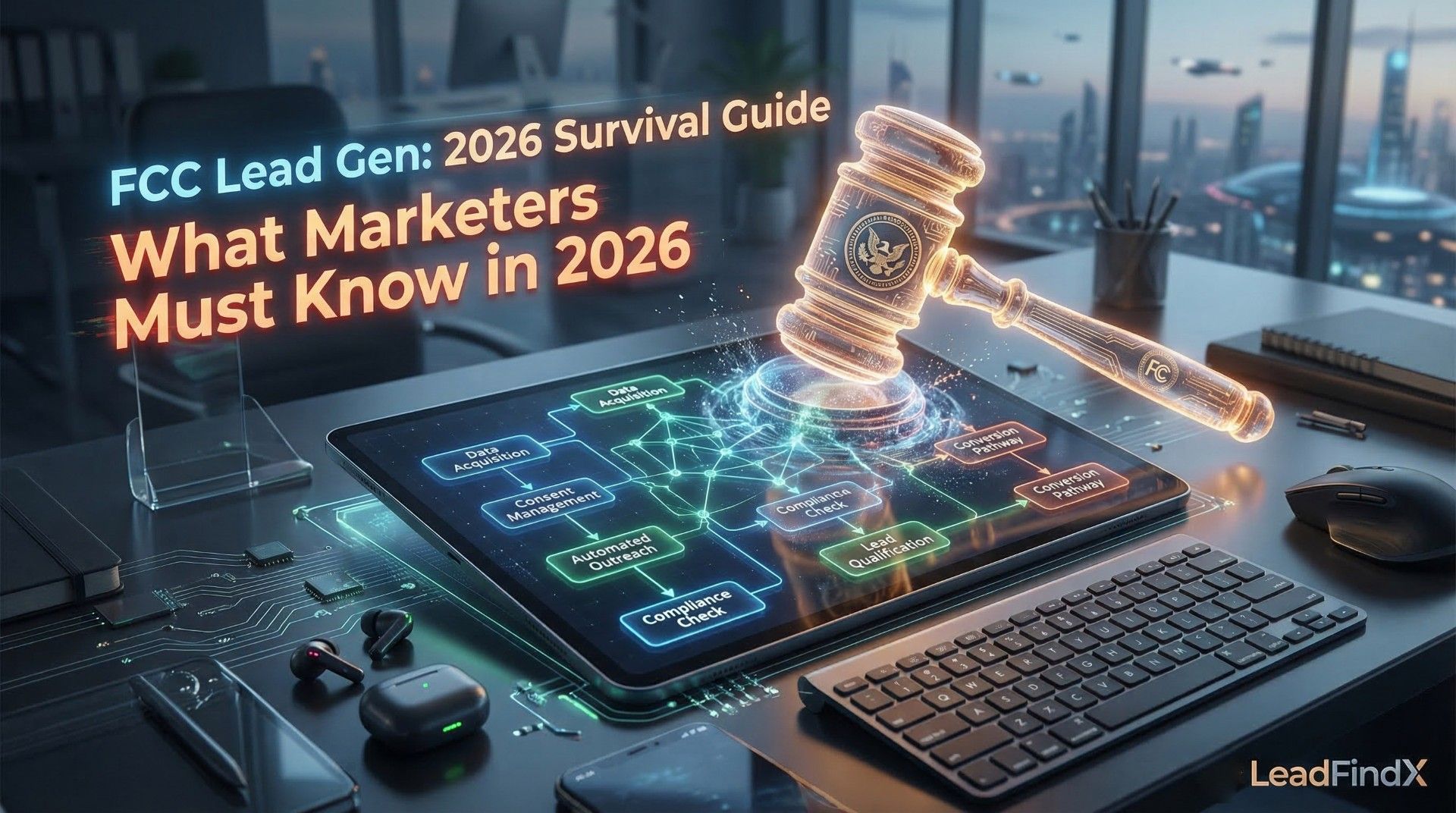
The FCC Lead Gen Rule is Dead (Mostly): What Marketers Must Know in 2026
 LeadFindX
Is the FCC 1:1 consent rule officially dead? With the 11th Circuit ruling and new 2026 delays, the TCPA landscape has shifted. Learn what is actually being enforced, from the 10-day opt-out rule to the new robotexting regulations.
The FCC Lead Gen Rule is Dead (Mostly): What Marketers Must Know in 2026
If you’ve been following the frantic headlines about the "Lead Gen Apocalypse," you’ve likely heard that the FCC’s one-to-one consent tcpa update was set to change the industry forever. But as we move through 2026, the reality is far more nuanced.
Thanks to a landmark ruling in Insurance Marketing Coalition v FCC ruling, the "One-to-One" mandate has been legally vacated and its implementation delayed. However, before you celebrate a return to the lead generator loophole law status, you must realize that while the rule is on life support, TCPA compliance is more aggressive than ever.
1. The Legal Status: Why the Rule is "Dead" (For Now)
In early 2025, just days before the fcc lead generation rule 2026 was scheduled to take effect, the 11th Circuit Court of Appeals struck a major blow.
The Impact of 11th Circuit FCC Ruling
The court found that the FCC likely exceeded its authority by trying to redefine "prior express written consent" to exclude lead aggregators and comparison shopping sites.
Current Implementation Status
- Postponed: Following the challenge, the FCC officially delayed the effective date for the fcc 64.1200(f) changes to January 26, 2026, or until a final judicial notice is issued.
- Vacated: The court's decision in Insurance Marketing Coalition v FCC technically vacated the rule, meaning the is the fcc lead gen rule still in effect answer is: not as originally written.
2. The "Revoke-All" Delay: Another Extension for 2026
It isn't just the one-to-one rule that’s seeing delays. The fcc revocation of consent rules 2026 - specifically the requirement that an opt-out for one message applies to all messages from that sender - has been pushed back again.
| Rule Detail | One-to-One Consent vs Blanket Consent | Consent Revocation Delay 2027 |
|---|---|---|
| Status | Blanket consent is technically still legal due to the stay. | The "revoke-all" mandate is delayed to January 31, 2027. |
| Marketer Risk | High; tcpa fines for lead generation still apply for non-clarity. | High; must still honor fcc robocall rule 2026 opt-out speed. |
3. What IS Currently Active (The "Teeth" of 2026)
Don't let the "Dead" headline fool you. The FCC and class-action attorneys are still winning massive suits by focusing on robotexting regulations 2026 and automated dialing system laws 2026.
Prior Express Written Consent (PEWC)
You still need prior express written consent for any telemarketing using an automated dialing system. This means your website opt-in language for leads must include clear and conspicuous disclosures.
The 10-Day Rule & Revocation
The window to process an opt-out has been slashed to 10 business days. Furthermore, you must honor any reasonable method of revocation, including artificial voice message regulations prompts or simple "Stop" texts.
4. How to Stay TCPA Compliant in 2026
To protect your lead generation for marketing agencies compliance, follow this digital marketing compliance checklist 2026:
Step 1: Fix Your Legally Compliant Lead Capture Forms
Even without a forced 1:1 rule, your lead sharing consent rules must be transparent. Avoid "hidden" partners on your comparison shopping website compliance pages.
Step 2: Audit Your Lead Aggregator TCPA Requirements
If you buy leads in 2026, ensure your lead vendor compliance auditing includes checking for TrustedForm or Jornaya tokens.
Step 3: Identify Intent with LeadFindX
Buying lists is the #1 way to get hit with tcpa consent requirements for startups. Instead, identify the high-value intent already on your site. LeadFindX allows you to see the companies visiting your pages in real-time. Since these leads are generated on your property, documenting how to stay tcpa compliant 2026 is significantly easier.
5. Common Questions: 2026 Compliance FAQ
Can I buy leads in 2026?
Yes, you can I buy leads in 2026, but you must ensure the consent was obtained via legally compliant lead capture forms. Even if 1:1 consent is delayed, "daisy-chaining" leads without clear and conspicuous disclosures will still trigger tcpa fines for lead generation.
Is the 1:1 consent rule officially dead?
Not permanently. While there is an fcc 1:1 consent rule delay, the new tcpa rules for 2026 still emphasize that consent must be "logically and topically associated." Major carriers (like T-Mobile) are already enforcing their own 1:1 standards for robotexting traffic.
How do I handle a "Stop" request?
Under the fcc revocation of consent rules 2026, you have exactly 10 business days to honor it. You may send one (1) final confirmation text, but it must be sent within 5 minutes and contain zero marketing content.
What are the penalties for non-compliance?
tcpa lead generation lawsuit examples from early 2026 show penalties reaching $1,500 per call for willful violations. Additionally, failing to scrub against the do not call list texting rules 2026 can result in fines of over $40,000 per violation under certain state laws.
6. The Future: Compliance for Lead Hunters
As we look at the future of lead generation 2026, the "loopholes" are closing, even if the specific fcc 1:1 consent rule delay gives some breathing room.
- Robotexting Loophole Closed: The FCC is now aggressively targeting robotexting with the same fervor as robocalls.
- Lead Buying Compliance Best Practices: If you are a lead hunter, you must scrub against the do not call list texting rules 2026 daily.
- Lead Generation Regulations for Small Business: Even small players are not exempt. tcpa lead generation lawsuit examples show that "I'm too small to be noticed" is a myth.
Final Thoughts: Strategy Over Syntax
The lead generation legal updates of 2026 are a moving target. The fcc vs lead generators battle will continue, but the message is clear: the era of "bundled, untraceable consent" is ending.
If you want to move away from the risk of purchased leads and start identifying the legally compliant high-intent accounts already visiting your site, remember that LeadFindX can do that by lighting up your dark traffic in real-time.